


 |
| अमर उजाला (19 सितम्बर, 2016) |
Tuesday, 27 September 2016


Saturday, 24 September 2016
Fruit rot of mandarin orange
In December 1978, the author observed the stored fruits of Citrus reticulata Blanco severely infected by a fungus causing soft rot in local fruit market of Faizabad. The entire fruit surface was densely covered by the fungus causing the rot. The fungus was isolated on PDA medium and identified as Trichoderma lignorum (Tode) harz.
In India, T. lignorum has been found on various substrates, viz., soil, rhizosphere region of Pennisetum typhoides, paddy straw of mushroom beds, phyllosphere of Impatiens balsamina and Citrus crysocarpa but not on Citrus reticulata and the present association is a new record for India. (Link)
Cited this as: R.S. Kanaujia (1979): Fruit rot of mandarin orange. Indian Phytopathology. 32(3):450.
Thursday, 15 September 2016
Notes on a new fungal disease of Alocasia indica
 Short hole disease of Alocasia indica Schott, caused by Phoma exigua Desm., earlier unknown to India has been reported from Faizabad. The infection was chiefly confined to the margins of lamina. It started as small nonchlorophyllous spots near the fronds. The spots gradually enlarged irregularly upto 2-3 cm sq. area of the leaf, merged and in final stage, necrosis and then short holes appeared within a month. The pathogenicity tests performed by standard methods proved pathogenic nature of the fungus.(link)
Cited this as : R.S. Kanaujia (1978): Notes on a new fungal disease of Alocasia indica. Indian Phytopathology. 32(3): 463.
Thursday, 1 September 2016
Wet rot of Amaranthus viridis

During survey of fungi causing disease in plants at Faizabad (U.P.), authors observed infection of wet rot disease on Amaranthus viridis L. plants growing as mixed crop with Abelmoschus esculentus at Ram Kote, Ayodhya of Faizabad district in September, 1976. The infection was severe during flowering when percentage of infection recorded was upto 60-70. The microscopic studies of the original specimen and that grown on Czapek's Agar Medium match with the description of Gilman for Choanephora cucurbitarum (Berk. & Rav.) Thaxter. The pathogenicity of the fungus was established. This is the first report of this fungus on Amaranthus viridis (Chaulai). (Link)
Cited this as: C.S. Singh and R.S. Kanaujia (1978): Wet rot of Amaranthus viridis. Indian Phytopathology. 31(1): 99.
Tuesday, 30 August 2016
Abnormality in Archegoniophore of Marchantia polymorpha L.
 Abnormality in the reproductive organs of different genera in order Marchantiales has been described by various workers. The specimen of Marchantia polymorpha L., collected from Mani parvat at Ayodhya in Faizabad exhibits the emergence of an abnormal vegetative branch with gemma cup from the upper half of the archegoniophore. This is supposed to have happened either due to near freaks or by reversion of ancestral characters because compact carpocephala in Marchantiales has been derived by the condensation of the dichotomous branches of the growing point of receptacles.This has been described for the first time from U.P. plains. (Link)
Cited this as: R.S. Kanaujia and C.S. Singh (1975): Abnormality in Archegoniophore of Marchantia polymorpha L. TECHNOLOGY 12(2): 165-166.
Tuesday, 31 May 2016
धरती के करीब लाल ग्रह: मंगल
मंगल सौर मण्डल में सूर्य से बुद्ध, शुक्र तथा पृथ्वी के बाद चौथा ग्रह है। पृथ्वी से देखने पर इसकी आभा रक्तिम दिखाई देती है इसी वजह से इसे लाल ग्रह के नाम से भी जाना जाता है। मंगल की सूर्य से औसत दूरी लगभग 23 करोड़ कि॰मी॰ और कक्षीय
अवधि 687 (पृथ्वी) दिवस है। मंगल पर सौर दिवस एक पृथ्वी दिवस से मात्र
थोड़ा सा लंबा है : 24 घंटे, 39 मिनट और 35.244 सेकण्ड। एक मंगल वर्ष 1.8809 पृथ्वी वर्ष के बराबर या 1वर्ष, 320 दिन और 18.2 घंटे है। मंगल का अक्षीय झुकाव 25.19 डिग्री है, जो कि पृथ्वी के अक्षीय झुकाव के बराबर है। परिणामस्वरूप, मंगल की ऋतुएँ पृथ्वी के जैसी है, हालांकि मंगल पर ये ऋतुएँ पृथ्वी पर से दोगुनी लम्बी है।
अन्य ग्रहों की भांति मंगल भी दीर्घवृत्ताकार कक्षा मे सूर्य की परिक्रमा करता है। इसी वजह से इसकी दूरी पृथ्वी से बदलती रहती है। इसके अलावा ग्रहों विशेषकर ब्रहस्पति का गुरुत्व खिंचाव भी इसके परिक्रमा मार्ग पर आंशिक असर डालता है। पृथ्वी से इसकी सबसे निकटतम दूरी 5.46 करोड़ किलोमीटर होती है जब कि अधिकतम दूरी 40 करोड़ किलोमीटर तक हो जाती है । वर्ष 2003 में मंगल ग्रह धरती
के बेहद करीब आया था। तब पृथ्वी से इसकी दूरी मात्र 5.57 करोड़ किलोमीटर दर्ज की गई थी। ऐसा दुर्लभ नज़ारा पिछली बार 60 हजार वर्ष पूर्व हुआ था। भविष्य मे ऐसी करीबी स्थिति वर्ष 2287 में बनेगी।
इस बार फिर, इस वर्ष 8 मई से लेकर 3 जून तक मंगल ग्रह पृथ्वी के काफ़ी
नजदीक से गुजरेगा। इस दौरान 30 मई को रात 9:36 पी एम पर यह पृथ्वी के सबसे
नजदीक होगा। इस समय पृथ्वी और मंगल के बीच दूरी महज़ 7.53 करोड़ किलोमीटर रह जाएगी। अगली बार यह नजारा 31 जुलाई, 2018 को दिखेगा।
 |
| अयोध्या में मंगल ग्रह को देखते हुए डॉ आर. एस. कनौजिया, कामेश मणि पाठक, इनरमल, महेश, सुशील कुमार, पूनम तथा लावण्या (दाहिने से बायें) 30 मई, 2016, 9:40 पी एम |
Saturday, 21 May 2016
बासी गन्ने मे शर्करा क्षरण को कम करने हेतु परियोजना के कार्यों का संयुक्त सारांश
चीनी उत्पादन को प्रभावित करने वाले कारकों में गन्ना काटने से लेकर पेराई के बीच होने वाले अंतर का चीनी परता के ह्रास में मुख्य भूमिका है। इस ह्रास से किसान एवं चीनी उद्योग दोनों को राजस्व का घाटा होता है। ऐसे ह्रासो को कम करने की दिशा में विज्ञान एवं प्रौद्योगिकी परिषद, लखनऊ द्वारा एक वित्त पोषित परियोजना गन्ना शोध संस्थान, शाहजहाँपुर में वर्ष 2006 से 2008 के मध्य चलाई गई।
परियोजना के प्रथम वर्ष (2006-2007) में ऐसी प्रजातियों का चयन किया गया था जिनमे शर्करा विघटन को रोकने की अपेक्षाकृत अधिक शक्ति होती है। सामान्य तौर पर गन्ने की बुवाई शरद (अक्टूबर - नवम्बर), बसन्त (फरवरी - मार्च) एवं देर बसन्त (अप्रैल- मई ) में की जाती है। इस अध्ययन में गन्ने के वजन का अपेक्षाकृत ज्यादा ह्रास शरदकालीन गन्ने में पाया गया। शर्करा ह्रास बसंतकालीन गन्ने में अपेक्षाकृत कम मिला। शरदकालीन प्रयोग मे 10 होनहार गन्ना प्रजातियों (को0 शा0 767,को0 शा0 8432, को0 शा0 97261, को0 शा0 97264, को0 शा0 95255, को0 शा0 8436, को0 शा0 96268, को0 से0 92423 एवं को0 शा0 98231) का मार्च, अप्रैल एवं मई के महीनों मे गन्ना काटने के उपरांत 24, 48, 72, 96 एवं 120 घंटे तक वजन एवं शर्करा के आंकड़े लिए गए। परिणाम बताते हैं कि जैसे-जैसे मार्च से मई के मध्य वातावरण का तापक्रम तथा स्टेलिंग की अवधि बढ़ती गई वैसे-वैसे गन्ने के वजन में कमी परिलक्षित होती गई। यह मार्च, अप्रैल एवं मई के महीनों मे क्रमश: 7.00 से 11.25 प्रतिशत, 10.70 से 13.25 प्रतिशत तथा 13.00 से 18.75 प्रतिशत आंकी गई। 24 से 120 घंटे की कुल अवधि मे औसतन यह कमी 4.58 से 19.58 प्रतिशत तक मिली। इस आधार पर को0 से0 92423, को0 शा0 8436, को0 शा0 8432, को0 शा0 97261 तथा को0 शा0 767 प्रजातियाँ वजन में कम ह्रास प्रदर्शन के कारण सर्वश्रेष्ठ पायी गई। गन्ना भार की तरह शर्करा की मात्र भी तापक्रम तथा स्टेलिंग की अवधि बढ़ने पर कम होती गईं जो मार्च, अप्रैल तथा मई में क्रमश: 0.46 से 0.53 प्रतिशत, 0.59 से 0.90 प्रतिशत तथा 0.85 से 1.02 प्रतिशत पाई गई। 24 से 120 घंटे की कुल अवधि मे औसतन यह कमी 0.07 से 1.76 प्रतिशत तक देखी गई। इस कार्य मे आशातीत सफलता प्राप्त हुई तथा विभिन्न प्रजातियों (को0से0 92423, को0 शा0 8436, को0 शा0 95255 तथा को0 शा0 96268) का चयन किया गया जो गन्ना भार तथा देर तक शर्करा विघटन रोकने मे सक्षम रही।
परियोजना के द्वितीय वर्ष (2007-2008) में मुख्य रूप से वैज्ञानिक यांत्रिक एवं रसायनिक विधियों का आंकलन करना था जिसके द्वारा गन्ना काटने के बाद भार एवं चीनी परता ह्रास को कम करने में सहायक पाया जा। इस कार्य के प्रथम चरण में कटे हुए गन्ने को निम्नलिखित विधियों के अंतर्गत रखा गया। तदुपरान्त 0 से 120 घंटों तक गन्ना भर एवं चीनी परता का आंकलन किया गया।
- गन्ने को छाया में रखना।
- गन्ने को खुले स्थान पर रखकर गन्ने की पत्तियों से ढकना (0.5 कुं0 गन्ने की पत्तियाँ एक टन गन्ने के लिए पर्याप्त हैं)।
- गन्ने पर पानी का छिङकाव करना (250 ली0 पानी एक टन गन्ने के लिए पर्याप्त)।
- गन्ने को खुले स्थान पर रखकर गन्ने की पत्तियों से ढकना तथा पानी का छिडकाव करना (उपरोक्त अनुसार )।
इन विधियों को अपनाकर कटे हुए गन्ने में होने वाले भार एवं चीनी परते के ह्रास को कम किया जा सकता है।
द्वितीय वर्ष (2007-2008) के प्रयोग में यह पाया गया कि सभी उपरोक्त विधियाँ नियंत्रण (खुले स्थान पर गन्ने को रखना) के तुलना मे सार्थक रूप से अच्छी पाई गईं। यद्यपि गन्ने को खुले स्थान पर रखकर गन्ने की पत्तियों से ढकना तथा पानी का छिडकाव करना अपेक्षाकृत अच्छा पाया गया लेकिन किसान उपरिलिखित कोई भी विधि अपनाकर गन्ना भार एवं चीनी परता में होने वाले ह्रास को कम कर सकता है। फिर भी, यदि सामान्य रूप से कटे गन्ने के ढेर को गन्ने की सूखी पत्तियों से जो कि आसानी से उपलब्ध हो जाती है, ढ़क दिया जाए तो यह विधि अपेक्षाकृत आसान होती है।
रासायनिक विधि में विभिन्न रसायनों (मरक्यूरिक क्लोराइड, ज़िंक सल्फेट, अमोनियम बाइफ्लोराइड, सैलीसिलिक एसिड, सोडियम एजाइड) के 1 प्रतिशत घोल का कटे हुए गन्ने पर छिडकाव करके गन्ना भार एवं चीनी परता ह्रास को कम करने का प्रयास किया गया। इस दिशा मे भी सफलता प्राप्त हुई। सभी रसायनो ने चीनी परता ह्रास के संबंध मे नियंत्रण (किसी भी रसायन का छिडकाव नहीं) की तुलना में अच्छे परिणाम दिये। ये परिणाम नियंत्रण की तुलना मे सांख्यिकीय दृष्टि से सार्थक पाये गए। उपरोक्त रसायनों मे सोडियम एजाइड एवं अमोनियम बाइफ्लोराइड ने अपेक्षाकृत अच्छा परिणाम दर्शाया।
इस प्रकार यदि चीनी मिल गेट पर अत्यधिक गन्ना एकत्रित हो जाए अथवा किसी कारण से चीनी मे शटडाउन की स्थिति उत्पन्न हो जाए जिससे गन्ना पेराई मे विलंब की संभावना हो तो उपरोक्त रसायनों का छिडकाव कर चीनी मिल चीनी परता में होने वाले ह्रास को कम कर सकती हैं।
इसी क्रम में द्वितीय वर्ष में इस बात का भी अध्ययन किया गया कि यदि गन्ने के साथ पताई भी पेराई में जा रही हो तो चीनी परता पर क्या प्रभाव पड़ेगा। इस प्रयोग द्वारा यह सिद्ध हो गया कि पेराई मे गन्ने के अलावा कोई भी अन्य चीज के जाने से रस की प्रतिशतता एवं चीनी परता कुप्रभावित होती है।
Friday, 20 May 2016
To develop technologies for minimizing sugar losses in staled sugarcane under U.P. conditions : A Joint Report
Late crushing of sugarcane is emerging challenge to Indian Sugar Industry. The time lag between harvesting to milling of cane generally ranges between 3-7 days which entails losses in recoverable sugar due to staling. Staling losses are virtually most detrimental to sugar industry. These losses affect the cane tonnage which have to bear to the can growers. To minimizing staling losses, a research scheme sponsored by Council of Science and Technology (Uttar Pradesh) was carried out at Sugarcane Research Institute, Shahjahanpur during 2006-2008.
In the first year of the project (2006-2007), the relative losses in sugar recovery and cane weight in elite varieties (CoS 767, CoS 8436, CoS 8432, CoS 97261, CoS 97264, CoSe 92423, CoS 95255, CoS 96268, CoS 96275 and CoS 98231) during staling hours from 0-120 in the month of March, April and May were assessed under the prevailing ambient temperature on the location. Irrespective of the varieties and months the increasing staling hours minimized the cane weight and sugar recovery. As per objective of the project, the investigation was made to find out those varieties which possessed maximum potential to face the staling constraints for the cane weight and sugar recovery losses. Among the varieties studies, variety CoS 8436, CoS 8432, CoS 97261, CoS 767 and CoSe 92423 found relatively better for less reduction in cane weight during the above said months. In respect of sugar recovery (Pol % Cane), varieties CoS 8436, CoS 8432, CoS 95255 and CoS 96268 found better due to their less reduction in sugar recovery during staling hours. These varieties are commonly cultivated at cane growers field. These findings have been disseminated to the sugar factory peoples, officials and cane growers by organizing several meeting at Sugarcane Research Institute, Shahjahanpur and these were duly informed to the commissioner, U.P. also.
In the first year of the project (2006-2007), the relative losses in sugar recovery and cane weight in elite varieties (CoS 767, CoS 8436, CoS 8432, CoS 97261, CoS 97264, CoSe 92423, CoS 95255, CoS 96268, CoS 96275 and CoS 98231) during staling hours from 0-120 in the month of March, April and May were assessed under the prevailing ambient temperature on the location. Irrespective of the varieties and months the increasing staling hours minimized the cane weight and sugar recovery. As per objective of the project, the investigation was made to find out those varieties which possessed maximum potential to face the staling constraints for the cane weight and sugar recovery losses. Among the varieties studies, variety CoS 8436, CoS 8432, CoS 97261, CoS 767 and CoSe 92423 found relatively better for less reduction in cane weight during the above said months. In respect of sugar recovery (Pol % Cane), varieties CoS 8436, CoS 8432, CoS 95255 and CoS 96268 found better due to their less reduction in sugar recovery during staling hours. These varieties are commonly cultivated at cane growers field. These findings have been disseminated to the sugar factory peoples, officials and cane growers by organizing several meeting at Sugarcane Research Institute, Shahjahanpur and these were duly informed to the commissioner, U.P. also.
After completion of first phase of the work in respect of selection of suitable and sustainable varieties which possessed sugar retaining potential for the longer period during staling, the second phase (2007-2008) was started with the objective to find out the suitable technologies by which the cane weight losses and sugar recovery during staling may be minimized. In this direction, irrespective of the varieties, it was focused much more on the technologies that should be easily adoptable and feasible. In the first year, it was assessed about the losses occurred during staling. The technologies applied to second year were divided in to two sections i.e. mechanical applications and foliar spray of different chemicals on harvested canes.
In the mechanical application, five treatments were included, viz., cane stored under shade, water spray, cane with trash cover and cane with trash cover + water spray. The data revealed that the cane weight losses can be minimized by putting the cane under shade condition or water spray under open condition (250 L water for one ton cane heap) or covering the harvested cane with cane trash under open condition (0.5 quintal trash is sufficient to cover one ton cane heap) or covering the harvested cane with cane trash along with water spray under open condition (as mentioned above). These mechanical applications are effective in minimizing the cane weight loss in staled canes. The minimization value noted at par among themselves but significantly differ to those canes which were left under open condition without any treatment. These technologies are more pronounced in the later months (April and May) when the ambient temperature become high and there are even possibilities of drying the canes rapidly.
In the chemical method, five chemicals namely Mercuric Chloride, Salicylic Acid, Ammonium Bifluoride, Zinc Sulphate and Sodium azide were sprayed (1 % conc.) on harvested canes. Among these chemicals although all are at par among themselves but relatively more effective chemicals were observed Sodium Azide and Ammonium Bifluoride in minimizing sugar losses in staled sugarcane compared to other.
The extraneous matter affected to the extraction % of juice and sugar recovery. Therefore, it was concluded that the cane should be free from all the extraneous matter to get maximum juice and sugar from the cane.
In the chemical method, five chemicals namely Mercuric Chloride, Salicylic Acid, Ammonium Bifluoride, Zinc Sulphate and Sodium azide were sprayed (1 % conc.) on harvested canes. Among these chemicals although all are at par among themselves but relatively more effective chemicals were observed Sodium Azide and Ammonium Bifluoride in minimizing sugar losses in staled sugarcane compared to other.
The extraneous matter affected to the extraction % of juice and sugar recovery. Therefore, it was concluded that the cane should be free from all the extraneous matter to get maximum juice and sugar from the cane.
Tuesday, 10 May 2016
बुद्ध परागमन ( Transit of Mercury)
जब बुद्ध ग्रह (मर्करी) सूर्य तथा पृथ्वी के मध्य से गुजरता है तो वह सूर्य की डिस्क पर एक काले बिन्दु के रूप मे दिखाई देता है। इसे घटना को ही बुद्ध परागमन कहते हैं। अंग्रेजी मे इसे Transit of Mercury कहा जाता है। इसकी तुलना 06 जून, 2012 मे पड़े वीनस ट्रांज़िट से की जा सकती है। इसे सर्वप्रथम फ्रेंच खगोलशास्त्री पियरे गैसेंडी ने 07 नवम्बर, 1631 मे देखा था। हालांकि इस घटना का सटीक अनुमान केपलर साहब ने पहले ही लगा लिया था परन्तु इसे देखने के लिए वे जीवित नहीं रहे। एक सदी मे इस प्रकार के लगभग 13-14 मर्करी ट्रांजिट पड़ते हैं। यह संख्या वीनस ट्रांजिट की तुलना मे कहीं अधिक है इसका कारण मर्करी का सूर्य से अपेक्षाकृत पास होना है। इस सदी के कुल 14 ट्रांजिट मे से अब तक केवल 02 ट्रांसिट (07 मई, 2003; 08 नवम्बर, 2006) ही हुए हैं जब कि 12 मर्करी ट्रांजिट होने शेष हैं जिनकी तिथियां इस प्रकार हैं- 09 मई, 2016; 11 नवम्बर, 2019; 13 नवम्बर, 2032; 07 नवम्बर, 2039; 07 मई, 2049; 09 नवम्बर, 2052; 10 मई, 2062; 11 नवम्बर, 2065; 14 नवम्बर, 2078; 07 नवम्बर, 2085; 08 मई, 2095 तथा 10 नवम्बर, 2098। विगत 10 वर्षों में यह पहला मौका है जब हम आज (09 मई, 2016) इस घटना के साक्षी बन रहे है। इसके बाद अगला ट्रांजिट 11 नवम्बर, 2019 को होगा लेकिन भारत में सूर्यास्त होने की वजह ये नहीं दिखेगा। भारत मे यह नजारा 16 वर्षों बाद 13 नवम्बर, 2032 को ही देखा जा सकेगा। विश्वपटल पर 09 मई, 2016 को पड़ने वाले ट्रांजिट की स्थिति को निम्न मानचित्र द्वारा समझा जा सकता है।
 |
| विश्वपटल पर ट्रांजिट ऑफ मर्करी (09 मई, 2016) |
ज्योतिष मे मर्करी ट्रांजिट के महत्व के संदर्भ में पंडित श्री कामेश मणि पाठक कहते हैं कि सूर्य तथा पृथ्वी के मध्य बुद्ध ग्रह का कुछ समय के लिए आना आध्यात्मिक दृष्टिकोण से ग्रहण दोष माना जा सकता है परन्तु सामाजिक मान्यता मे इसका कोई सर्वमान्य प्रभाव नहीं है। बहरहाल, मर्करी ट्रांजिट को देखने के लिए हमे सबसे पहले एक ऐसी जगह का चुनाव करना
था जहां से सूर्यास्त के दौरान बिना किसी अवरोध के सूर्य को देखा जा सके।
यह हमारे जेहन मे था कि पिछली बार नीम के पेड़ की वजह से हम वीनस ट्रांजिट
के प्रारम्भिक क्षणों को नहीं देख पाये थे। सो इस बार हमने यह गलती न
दोहराने का निश्चय किया। इसके लिए हमें ऐसी जगह चाहिए थी जो शहर से
दूर तथा ऊंचाई पर स्थित हो। मणिपर्वत इस प्रयोजन के लिए सर्वश्रेष्ठ जगह थी
सो हमने वहीं पर अपने उपकरण समायोजित करने का निर्णय लिया।चूँकि ट्रांज़िट 4:41 पी एम पर शुरू होना था इसलिए हम लोग 4:30 पी एम पर ही मणिपर्वत पहुँच गए। इस समय सूर्य मे अधिक चमक होने के कारण Nikon P-510 कैमरे से ट्रांज़िट देखना
संभव नहीं था सो हमने टेलिस्कोप के द्वारा पर्दे पर प्रतिबिम्ब प्रक्षेपित
करके ट्रांज़िट को देखा। हमारे साथ मणिपर्वत घूमने आए कुछ अन्य मेहमान भी
जुड़े और उन्होने भी इस घटना का आनंद लिया।
जैसे-जैसे शाम ढलती गई, सूर्य की चमक में भी कमी होती चली गई। ऐसे मे सिद्धार्थ का Nikon P-510 कैमरा बड़ा काम आया। उन्होने इससे ट्रांज़िट की कुछ बेहतर तस्वीरे हासिल कीं। ट्रांज़िट की पहली तस्वीर हमे 6:05 पी एम पर प्राप्त हुईं। हम सभी ने कैमरे की डिजिटल स्क्रीन पर भी इस ट्रांज़िट को देखा। कुल मिलाकर हम सभी इस अनूठी घटना के साक्षी बने।
 |
| मर्करी ट्रांज़िट के दौरान महेश, विकास, शौर्य (गोद मे), सुशील, लावान्या, शल्या तथा दो अन्य मेहमान (बायें से दायें) |
 |
| मेरे साथ विकास, सुशील और महेश बुद्ध परागमन को देखते हुए |
 |
| सिद्धार्थ बुद्ध परागमन की तस्वीरें लेते हुए |
 |
| मणिपर्वत से बुद्ध परागमन की प्रथम तस्वीर (09-05-2016; 6:05 पी एम) |
Sunday, 1 May 2016
Diversity of rust fungi in Oudh region of Uttar Pradesh

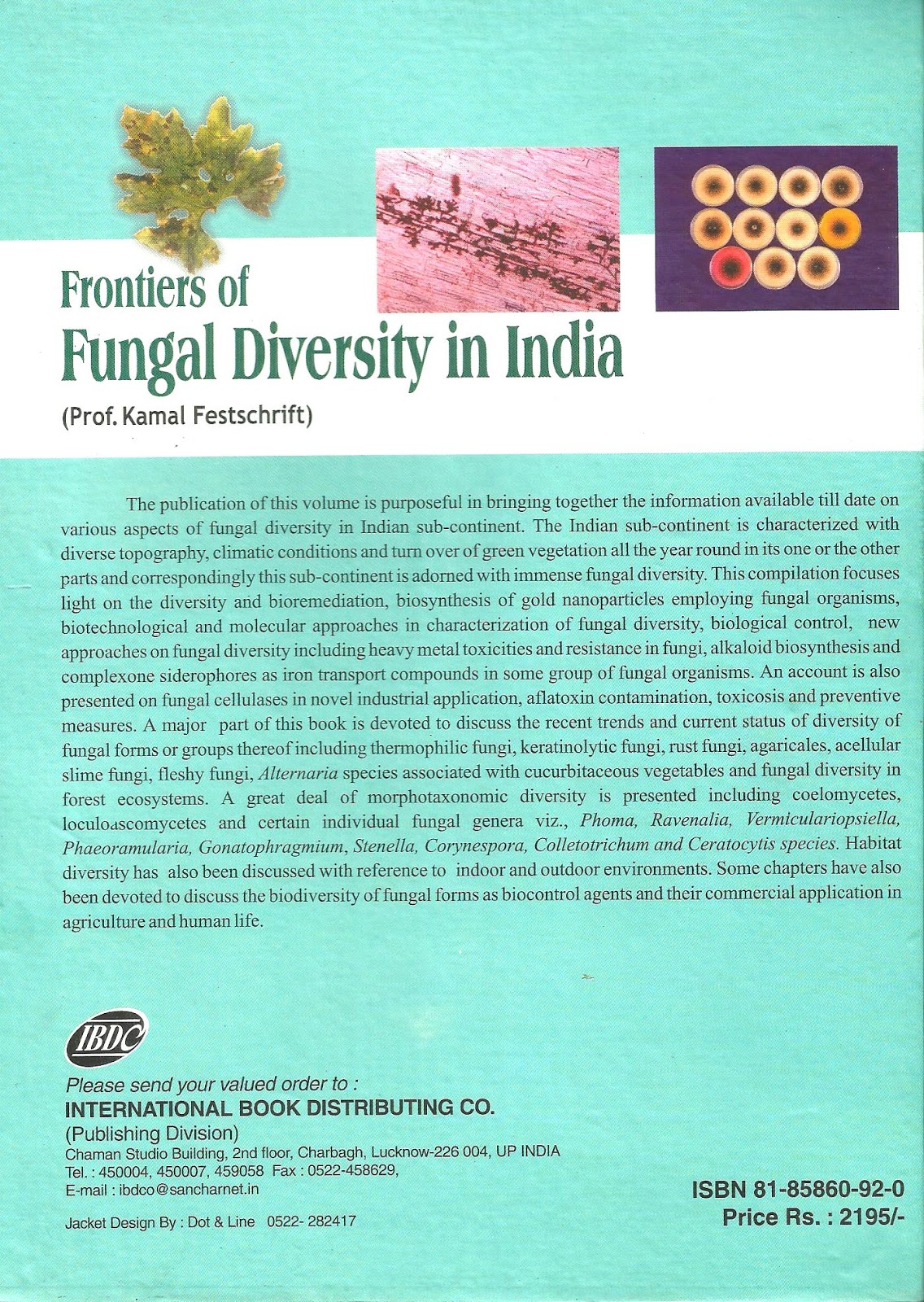
In all 207 rust species belonging to 15 genera related to 3 major families were recorded. Melampsoraceae having 4 genera with 16 species on 20 hosts, Pucciniaceae with 8 genera and 166 species from 22 hosts, and 3 form genera having 25 species from 31 hosts were identified. The host from 32 families of flowering plants were found parasitized by different rust species. Thirteen rust genera represented by 127 species were collected from 150 hosts of dicots and 7 genera with 86 species were recorded from 137 monocots; grasses being the main hosts. Poaceae widely followed by leguminosae dominated the spectrum of diversity. Poaceae alone contributed 85 hosts for 68 rust species. Amongst the total collection, 25 including 19 species of Puccinia, 4 of Uromyces and one each of Aecidium and Uredo warranted attraction. Of the above, Puccinia cenchri, P. dietelii, P. fragosoana, P. leptochloae-unifloare, P. magnusiana and P. suveolens were new to India, whereas Puccinia cenchri on Cenchrus setigerus Vahl., P. dietelii on Chloris barbata Sw. and P. leptochloae-uniflorae on Leptochloa panicea(Retz.) Ohwi. constituted the new host records. (Full paper at Slideshare.net)
Cited this as: Kanaujia R.S. and C.K. Yadav (2003): Diversity of rust fungi in Oudh region of Uttar Pradesh. In: Frontiers of Fungal Diversity in India. G.P. Rao, C. Manoharachari, D.J. Bhat, R.C. Rajak and T.N. Lakhanpal (Eds.) pp. 271-295. International Book Distributing Co., Lucknow (India).
Sunday, 17 April 2016
An unrecorded flora rot of Zinnia in India
Zinnia elegans Jacq., an ornamental plant of the family compositae has been found to be parasited by Rhizopus nigricans. The disease was recognized as flower rot. Earlier, R. nigricans has not been found on Zinnia elegans. It is, therefore, reported as a new fungus host association and a new disease record for India.
Cited this as: Kanaujia R.S., Singh C.S. and C.K. Yadav (1993): An unrecorded flora rot of Zinnia in India. Proceeding of the Eightieth Session of The Indian Science Congress Part III. p. 227. (Abstract)
Sunday, 10 April 2016
Effect of cereal, millet and legume bran supplement on yield and biological efficiency of oyster mushroom (Pleurotus flabellatus)
Oyster mushroom has been described both as parasite and saprophyte on several trees. In the wild, it is found on trunk or stumps of various trees and shrubs, mainly of deciduous nature. It belongs to family Pleurotaceae of order Agaricales. It is being popularized worldwide due to its nutritional properties which make it an ideal food for human consumption. Although, in India, it is admired due to its excellent flavor, taste and above all, easy and less expensive method of growing with a wide choice of species available for cultivation under different climatic conditions. Different approaches have been done to increase mushroom yield at different time interval. These include selection and preparation of substrate, spawn and spawning strategy, supplementation of organic and inorganic nitrogen sources. The nutrient composition of substrate is one of the important factor limiting the saprobiotic colonization of cultivated mushrooms and particularly the fruiting of Pleurotus spp. The growth of microorganisms as well as qualitative and quantitative yield of the desirable product also depends on the utilization of nutrients from the growing medium. The nutritional content of the substrate can be enhanced by the addition of nitrogen to the substrate that helps in getting higher mushroom yield. Keeping this in mind, different bran, viz., wheat, rice, maize, barley (cereal bran), sorghum (millet bran), pea, gram and pigeon pea (legume bran) were evaluated as supplement @ 10% on dry weight basis of substrate for enhancing yield and biological efficiency of Pleurotus flabellatus. Among the bran used, wheat, rice, sorghum, pea and pigeon pea bran produced significant yield and biological efficiency of mushroom than the control. It was recorded maximum in rice bran (655 gm, 131%) followed by wheat bran (615 gm, 123%), pea bran (600 gm, 120%), pigeon pea bran (595 gm, 109%) and sorghum bran (580 gm, 116%).
 |
| Effect of various supplements on mushroom cropping |
Significantly (P=0.05) higher weight/sporocarp was obtained from the barley (12.50gm), pea (13.63 gm) and pigeon pea bran (15.42 gm)while none of them produced significant number of sporocarp. (PDF file)
STUDIES ON CERTAIN ECOLOGICAL ASPECTS OF SOIL FUNGI- IX
Mycoflora of cultivated dhusi (sandy loam) soil kept at 10, 20, 30, 40, 50, 60, 70 and 80 percent moisture levels has been studied. By increasing the moisture status of the soil up to 30 per cent, the fungal population of the soil increased and then decreased onwards till 80 per cent moisture where the lowest population both in quality and quantity was obtained every time. Except for 20 per cent set, population decreased gradually on succeeding sampling dates. The bacterial population, on the other hand, increased with increasing moisture status from 10-80 percent. The waterlogging conditions at the higher moisture status (40-80 per cent) possibly reduced the aeration and favoured the growth of bacteria which may be held responsible for the low fungi with highly moistened soils. (PDF at Slideshare.net)
Cited this as- Kanaujia R.S. (1977): Studies on certain aspects of soil fungi. Part 9- Mycoflora in relation to moisture status. FERTILIZER TECHNOLOGY. 14(1&2): 104-107.
Subscribe to:
Posts (Atom)